Overcoming OCD and Anxiety with ERP and ACT starts with clarity.

Learn how Exposure and Response Prevention and Acceptance and Commitment Therapy help you take back control
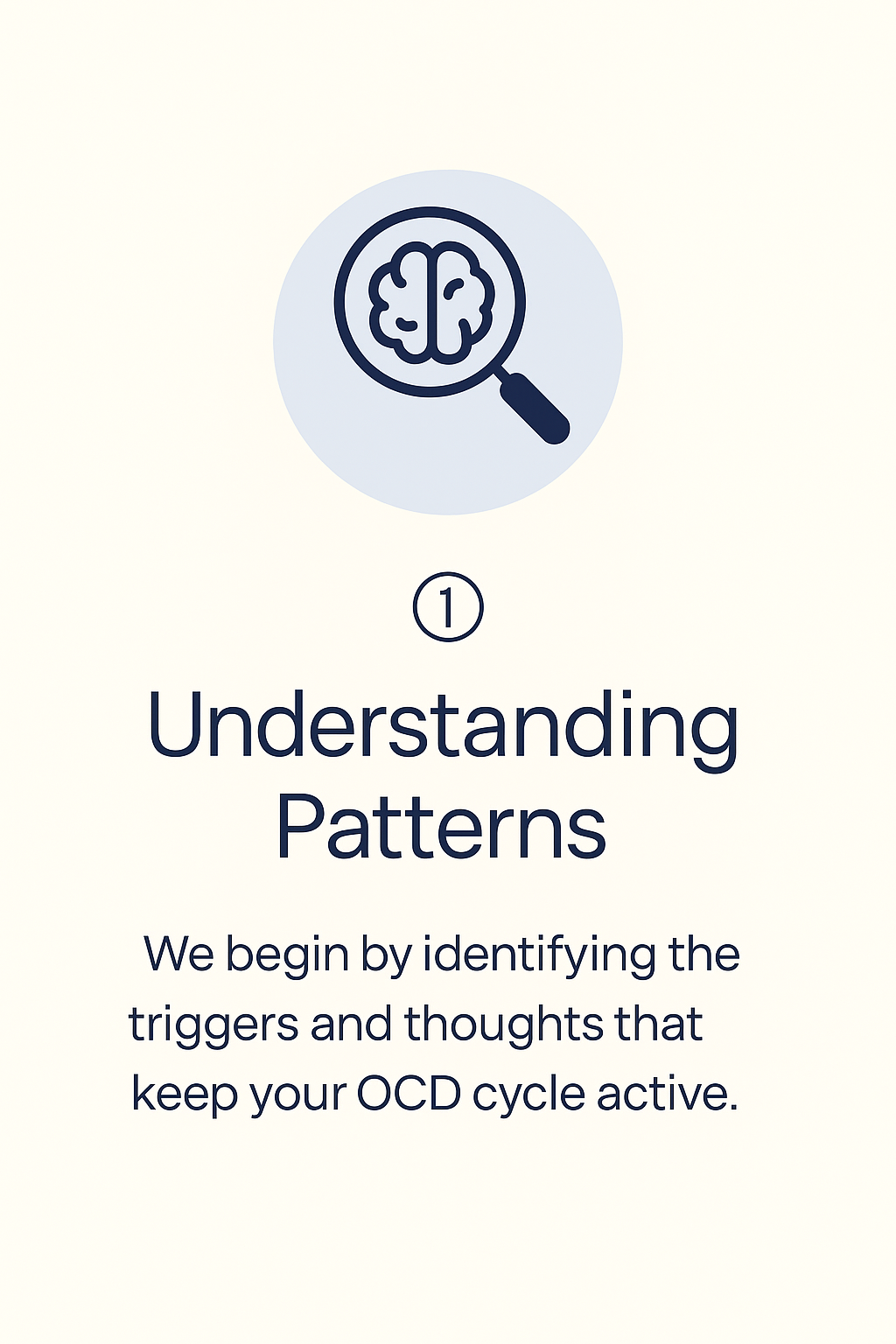
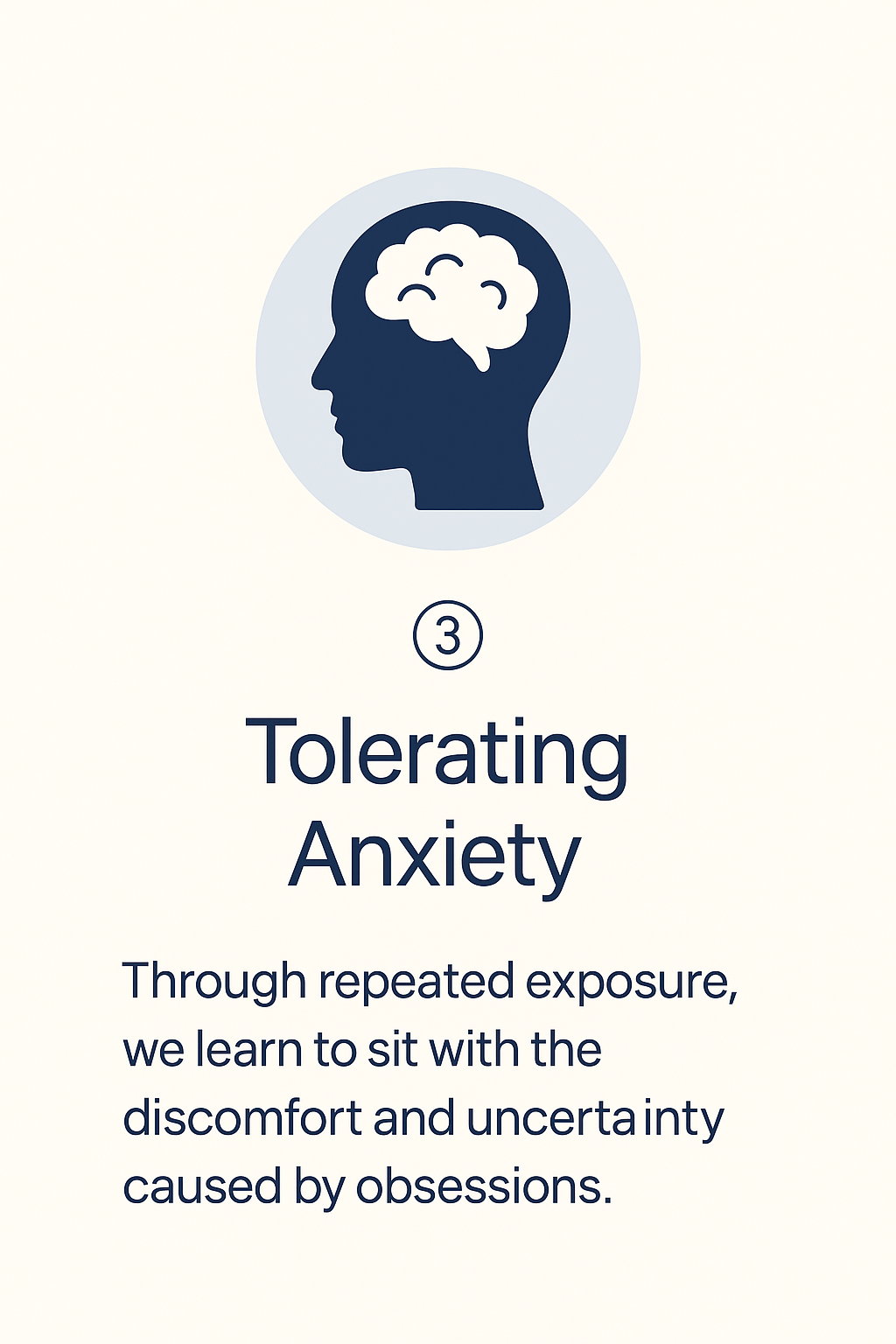
Illustration of a brain inside a magnifying glass, with the title 'Understanding Patterns' and the text 'We begin by identifying the triggers and thoughts that keep your OCD cycle active.'
Illustration of a person's profile with a brain inside, representing mental health. The text reads "Tolerating Anxiety" and explains that repeated exposure helps learn to sit with discomfort caused by obsessions.
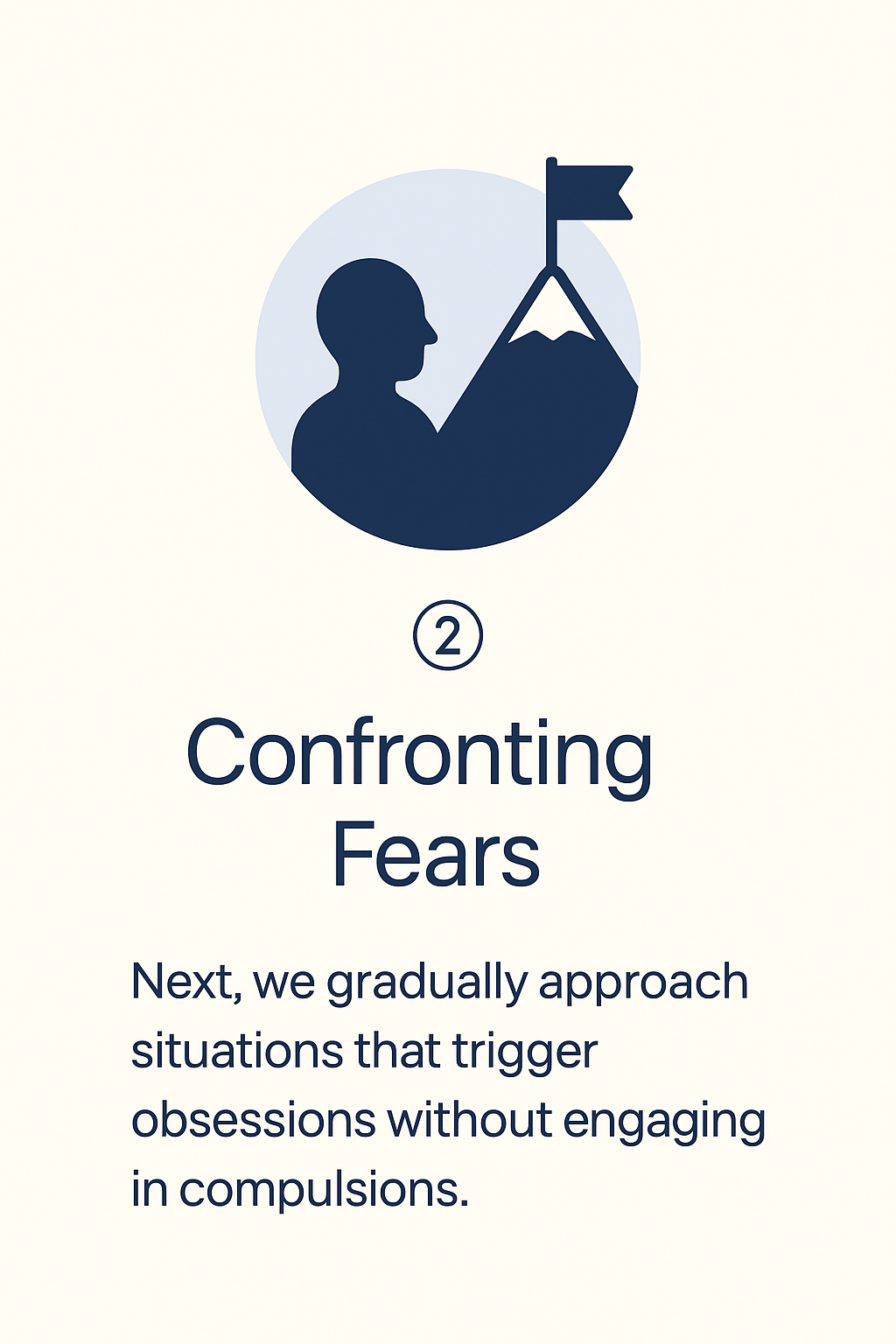
Icon of a person facing a mountain with a flag, symbolizing conquering fears, with the number 2 and the title 'Confronting Fears' and a description about approaching trigger situations gradually.
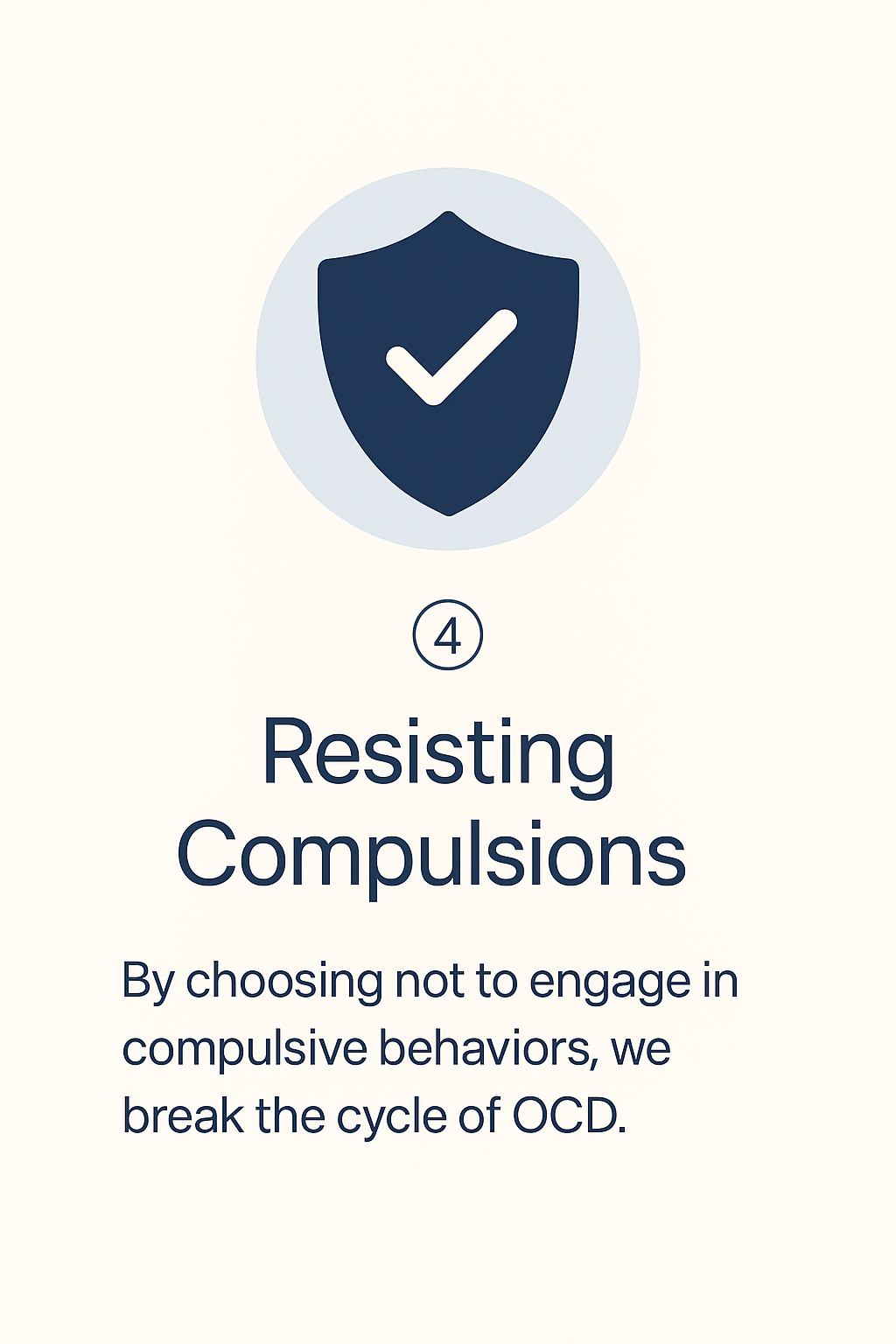
Infographic with a shield icon and check mark, titled 'Resisting Compulsions', emphasizing breaking the cycle of OCD by resisting compulsive behaviors.

ERP has an 83% success rate in reducing symptoms OCD

Foa, E. B. (1996). The efficacy of behavioral therapy with obsessive-compulsives. The Clinical Psychologist, 49(2), 19–22.

ERP is empirically validated; which means that studies show it to be the most effective treatment for OCD and can achieve real, meaningful results.

Ready to Get Unstuck?

Book Free Consult